Best Months to See the Milky Way in Big Bend National Park
When Can You See the Milky Way?
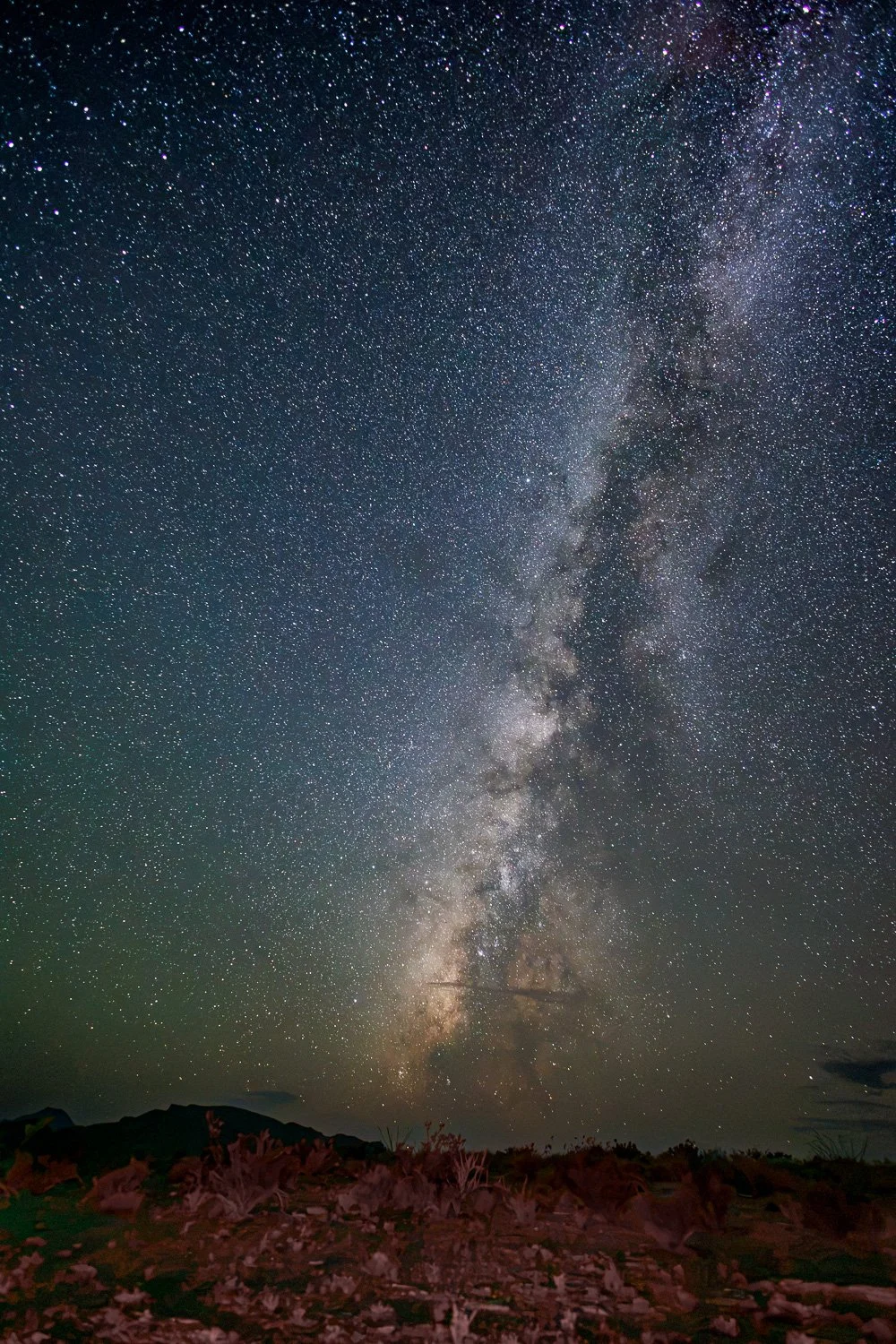
Milky Way at Starlingua Ranch in Big Bend
This is one of the most common questions I get from guests: "When's the best time to see the Milky Way?" The short answer is summer. The real answer is a little more interesting, and knowing it may surprise you and change when you plan your trip to Big Bend National Park. About 80% of North Americans can't see the Milky Way from where they live. I’m here to help make sure you can cross ‘Seeing the Milky Way’ off your bucket list.
The bright, dusty, photogenic part of the Milky Way you've seen in photos is the galactic core. Between heavily edited photos and AI-generated images, you'd think it hangs in the sky every night of the year. It doesn't. The core isn't visible all year, and even in the right season, it keeps its own schedule. I have all the details so you won’t miss out on one of the most breathtaking sights in the night sky.
Why the Milky Way Core Is a Summer Thing
Our solar system sits between the two main spiral arms of the Milky Way. When you look toward the constellation Sagittarius, you are looking toward the center of the Milky Way galaxy. That's where the stars, gas, and dust pile up into the bright glowing core. That direction is also full of stellar nurseries, glowing clouds of gas where new stars are forming, like the Lagoon Nebula.
How do you find Sagittarius? Look low in the southern sky on a summer night. It's known as the Archer, a centaur (half man, half horse) drawing a bow and aiming an arrow. It goes back to the Babylonians and the Greeks carried it forward. But in modern times the most recognizable part of the constellation is the subset of stars that form a ‘Teapot’, and the spout of the Teapot is pointing at the center of the Milky Way.
During the summer, Earth's night side faces straight toward the heart of the Milky Way. Imagine sitting on top of the mountains surrounding Los Angeles and looking toward downtown and all those brilliant lights. During the winter Earth is on the opposite side of the sun facing the outskirts of the Milky Way. Imagine tumbleweeds.
Besides being blessed with incredibly dark skies (Bortle 1), Big Bend has one more advantage: latitude. We're far enough south that the core climbs higher here than it does in most of the country. It clears the haze near the horizon and shows off all its glory.
Month-by-Month: Best Times to See the Milky Way
| Month | Peak viewing | Core rises | Core sets |
|---|---|---|---|
| March | 5:00–6:15 AM | 3:15 AM | After sunrise |
| April | 3:00–5:45 AM | 1:15 AM | After sunrise |
| May | 1:00–5:15 AM | 11:15 PM | After sunrise |
| June | 11:00 PM–5:00 AM | 9:15 PM | After sunrise |
| July | 10:30 PM–3:00 AM | Before sunset | 4:45 AM |
| August | 10:00 PM–1:00 AM | Before sunset | 2:45 AM |
| September | 9:20–11:30 PM | Before sunset | 12:45 AM |
| October | 8:40–9:45 PM | Before sunset | 10:45 PM |
All times are approximate for the Terlingua area. "Peak viewing" is when the core is well placed in a truly dark sky.
Come for the Milky Way, Stay for the Stargazing Tour
You’re making the trip all the way out here to Big Bend, I know it isn’t easy to get here. Think about going all in and booking a Private Stargazing Tour at Starlingua. And the best thing? It includes an Astro Portrait of you under the Milky Way!
Full Monthly details:
March and April are for early risers. The core comes up after midnight and is best in the last couple of hours before dawn.
May is a night-owl month. The core clears the eastern horizon around midnight and keeps climbing until sunrise.
June is when things get good. The core is rising as it gets dark and stays up all night, peaking in the early morning hours.
July and August are prime time. The core is already up when darkness falls and sits high in the south during the late evening. You don't have to stay up until 3 AM to see it at its best. That's why these are my favorite tour months for the Milky Way.
September is still excellent, just earlier. The core is highest right around full dark and then slowly sinks toward the southwest. The weather usually cools off, too.
October is the last call. You get a short window right after dark while the core hangs low in the southwest before it sets.
November through February, the core is gone from the night sky. But that doesn't mean the Milky Way is.
The Winter Milky Way
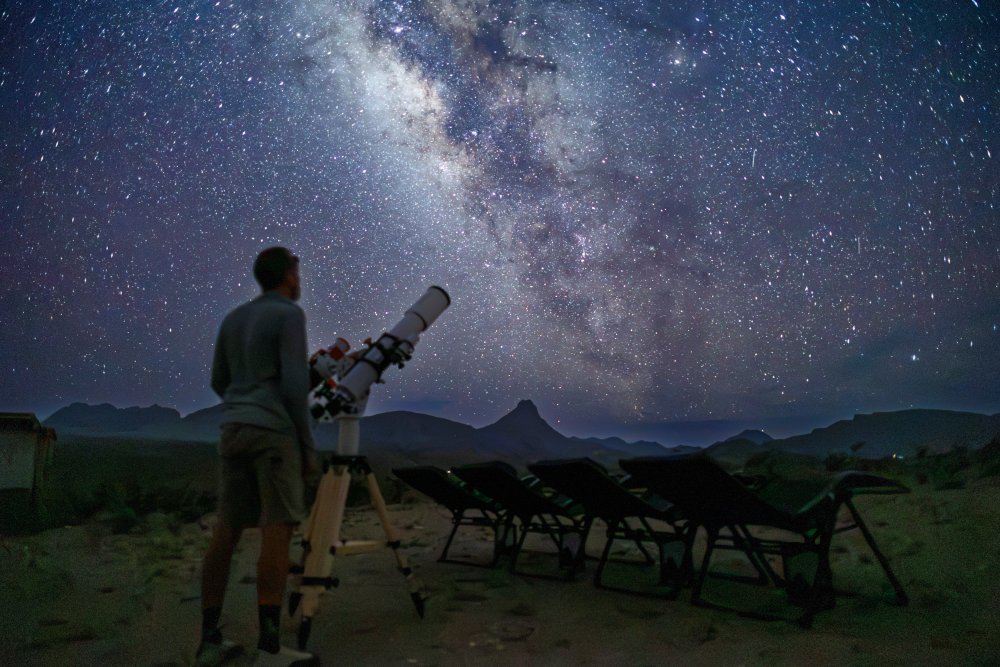
Milk Way over the Corazone Peaks in Big Bend
In winter we're looking the other way, out toward the edge of the galaxy instead of its center. There are fewer stars and less dust in that direction, so the winter Milky Way is fainter and thinner than the summer core. Under a Big Bend sky, it's still easy to see as a soft band running nearly overhead.
There is still plenty to see in the winter night sky from the Orion Nebula, one of the finest sights in the whole sky, to the Seven Sisters, a cluster of young blue stars that cultures around the world have told stories about for thousands of years.
Winter also has practical perks. It's dark by 7 PM, so you don't have to stay up late. The nights are long, the air is crisp and steady, and what else are you going to when it gets dark so early? Just bring more layers than you think you need. If there is a breeze you’ll get cold fast.
See It for Yourself
The Milky Way is spectacular with just your eyes out here. Through a telescope, it turns into something else entirely: individual star clusters, glowing nebulae, and structure you'd never know was there.
At Starlingua Ranch, I run private stargazing and telescope tours on a 60 acre dark-sky ranch north of Terlingua. Summer or winter, I'll show you the best of whatever the sky is offering that night.
Learn more about Starlingua’s Private Stargazing Tours →
For more on planning a night under Big Bend's skies, check out my 6 Awesome Places to Stargaze near Big Bend.
