The Perseids Over Big Bend: Your 2026 Viewing Guide for the Best Meteor Shower in Years
Terlingua, Texas — 29.3°N, 103.6°W, under the darkest skies in the Lower 48
Every August, Earth plows through the debris trail of Comet Swift-Tuttle, and the sky over Big Bend lights up with the Perseids meteor shower. The most beloved meteor shower of the year. Most years, that's already worth staying up for. This year is different.
The 2026 Perseids peak on the night of August 12–13 under a new moon. Zero moonlight. All night. That hasn't lined up this well since 2018, and out here in Big Bend National Park and Terlingua, part of the largest certified dark sky reserve on the planet, it means you'll see everything the shower has to give, including the faint meteors that moonlight (or city glow) normally erases.
When to Watch?
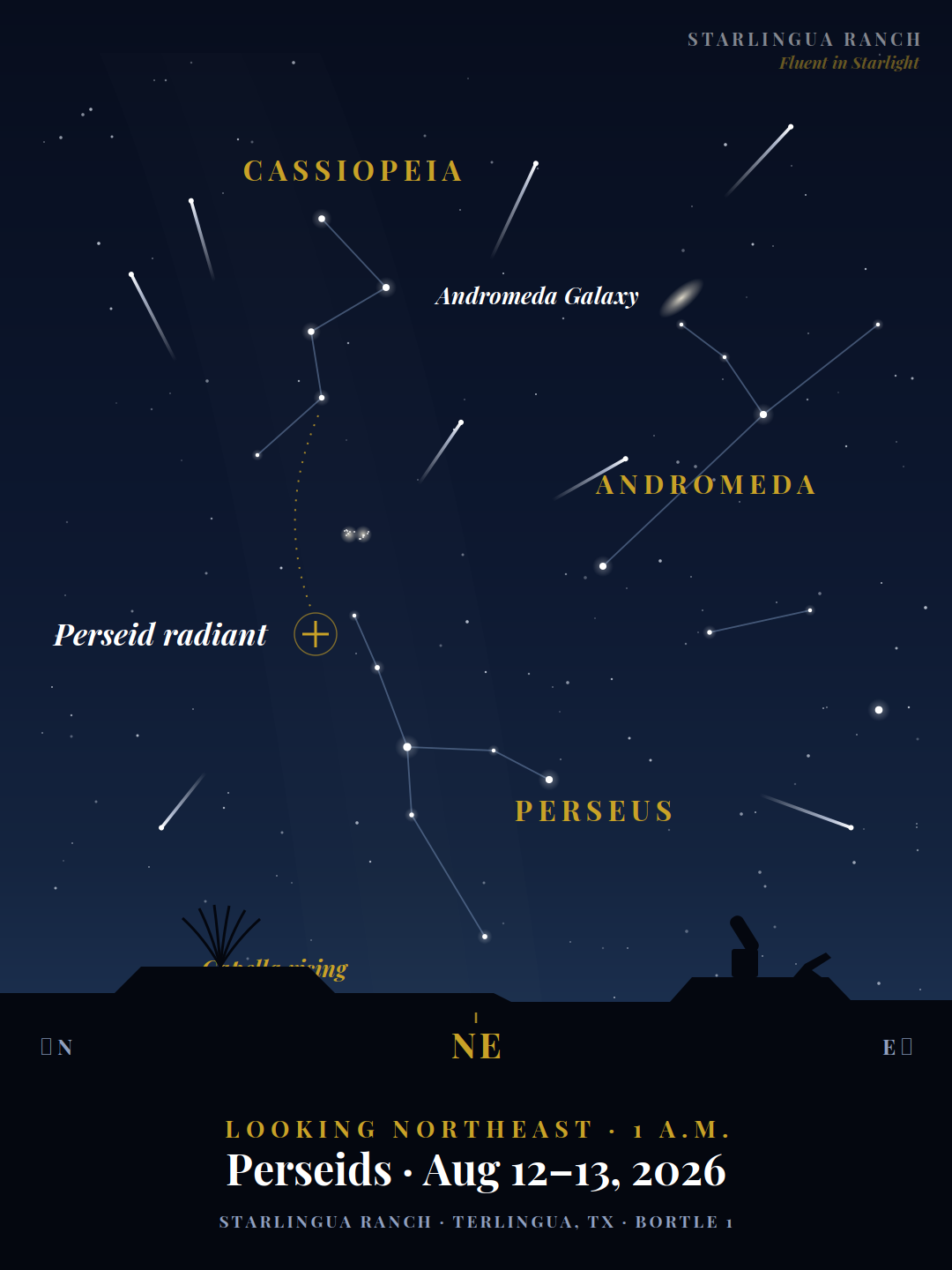
Where to look for meteor shower.
The shower is active from mid-July through late August, but the peak night is Tuesday into Wednesday, August 12–13. Here's how the night unfolds in Terlingua:
9:30–11:00 PM: Astronomical darkness settles in and the first Perseids start streaking. Rates are lower this early, but this is when you catch "earthgrazers" i.e. long, slow, dramatic meteors that skim the atmosphere near the horizon. Fewer of them, but they're the showstoppers. (Big dopamine hit if you spot one)
11:00 PM–1:00 AM: The radiant (the point in the constellation Perseus where the meteors appear to originate) climbs higher in the northeast. Rates build steadily.
1:00–5:00 AM: Prime time. The radiant is high, Earth is rotating you face-first into the debris stream, and rates hit their maximum. If you can only commit to a few hours, make it these. Go to bed early and set alarm for 1-2 AM and go outside for the peak. Have your chairs already setup.
The night before (August 11–12) is also excellent, expect roughly half to two-thirds of peak rates, under that perfectly dark moonless sky. If your schedule is flexible, you get two great nights.
How Many Meteors Will You Actually See?
The official rate for the Perseids is around 100 meteors per hour; but that number assumes a perfectly dark sky with the radiant directly overhead. Under most skies in America, people see a fraction of that.
Here's the thing: Terlingua is one of the few places where the "ideal conditions" number is close to real. Under our Bortle 1 skies with no moon, a patient observer in the pre-dawn hours can realistically expect a meteor every minute or so, with stretches where they come in bursts of two and three. Perseids are also famously bright and fast, and many leave glowing persistent trains that hang in the sky for a second or two after the meteor is gone.
Where to Look
Counterintuitively, don't stare straight at the radiant in Perseus. Meteors near the radiant look short and stubby. The longest, most dramatic streaks appear 40 degrees away from it; so face roughly northeast, then let your gaze drift up toward the zenith (i.e. straight up) and relax. Take in as much sky as possible. Out here there's no light dome to face away from, so you genuinely can't pick a bad direction. Just remember “overhead is your friend”.
Give your eyes 30 minutes to fully dark-adapt, and protect that adaptation like it's gold. No phone screens (one glance costs you 20 minutes of night vision). If you need light, use a dim red flashlight.
What You Need (Hint: Not a Telescope)
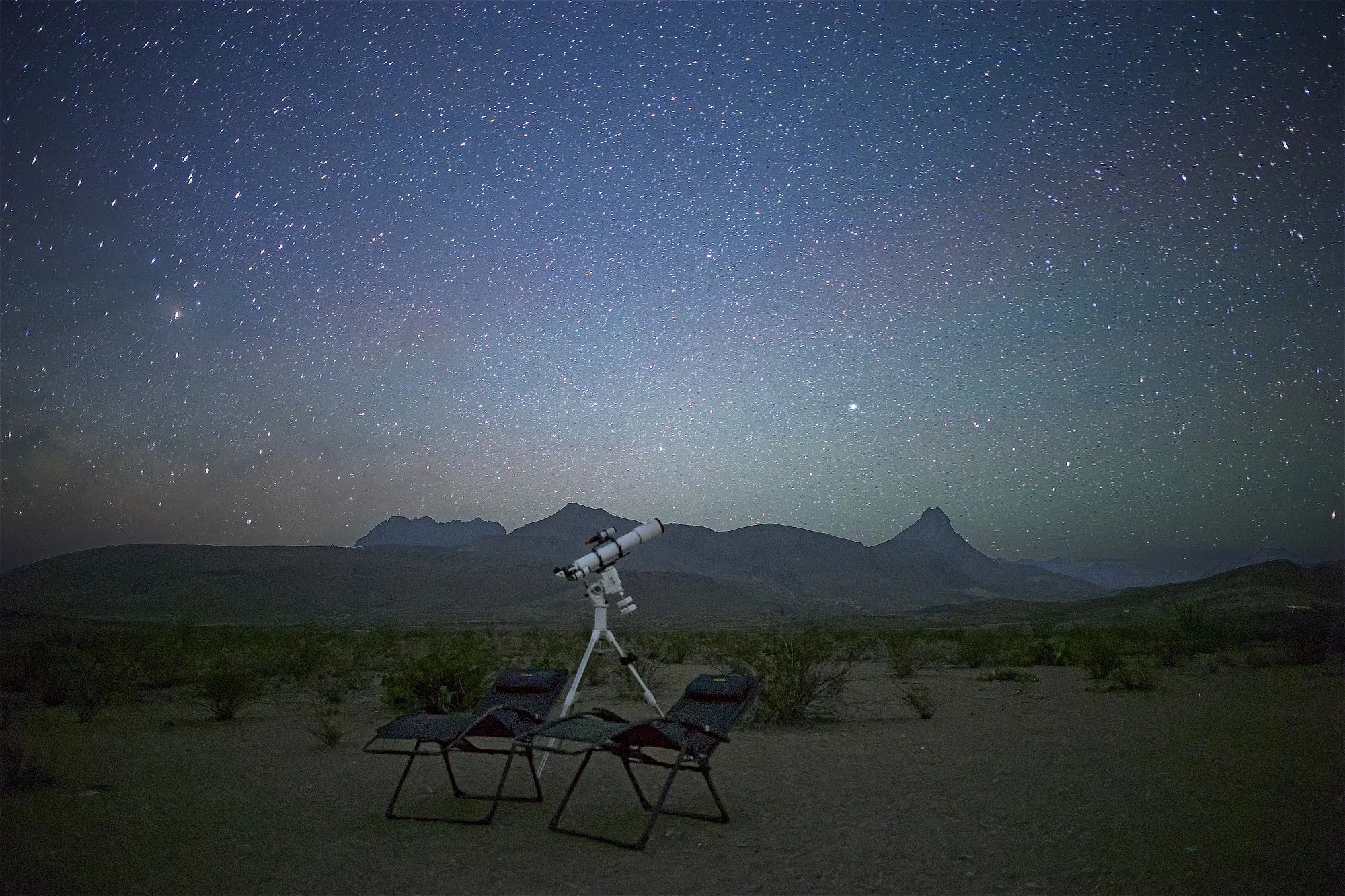
Zero-gravity chair is your best friend.
This is the best part; the Perseids are a naked-eye event, and equipment can actually work against you.
A telescope is the wrong tool. Meteors streak across huge swaths of sky in a fraction of a second; a telescope shows you a tiny patch of it. Leave the scope parked.
The most important piece of gear is a comfortable chair. Seriously. A zero-gravity recliner is the meteor watcher's secret weapon, it tilts you back so you're looking up at the sky without craning your neck, and you can settle in for an hour or three without stiffening up. Meteor watching rewards patience and comfort more than anything else. A blanket or reclining camp chair works too, but if you've got a zero-gravity chair, this is its night.
Binoculars are the perfect sidekick. Not for the meteors themselves, but for the in-between moments. While you're waiting on the next streak, sweep the summer Milky Way overhead: the star clouds of Sagittarius, the Double Cluster hanging right next to the Perseid radiant, the Andromeda Galaxy rising in the east. A basic pair of binoculars turns the lulls into their own little tour. My favorite are low power 6×32, wide field of view and lightweight.
Round it out with drinks, a light layer (desert nights dip into the 60s–70s even in August), and snacks. You will cool off fast since your not moving around, especially if there is any kind of breeze. That's the whole kit.
What about the Milky Way?
I’ve written a complete blog post on Will I see the Milky Way on my trip to Big Bend National Park?
The Big Bend Advantage
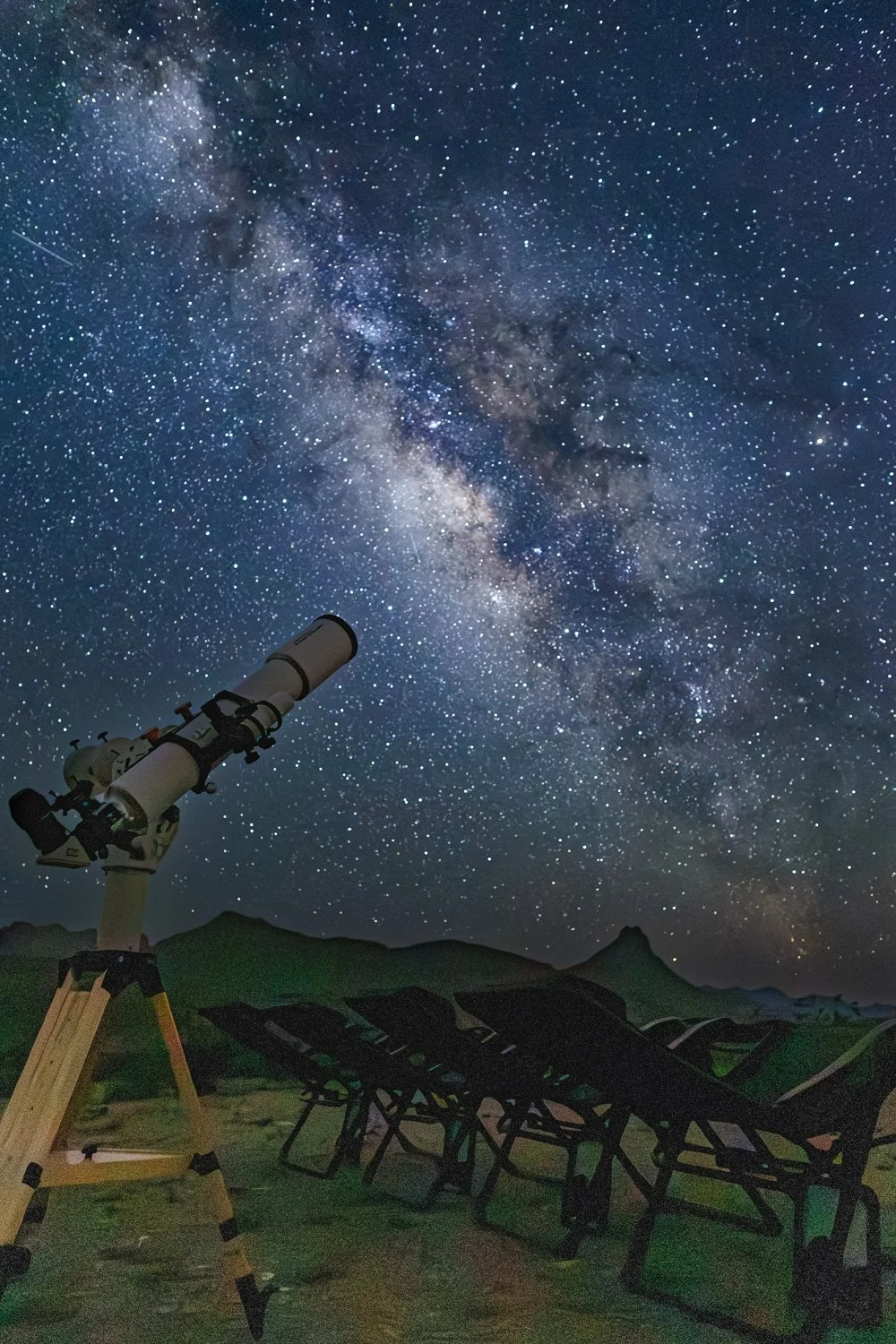
Milky Way over Big Bend
August in the Chihuahuan Desert is monsoon season, which sounds like bad news but usually isn't; afternoon storms tend to build over the mountains and clear out after sunset, often leaving the air washed clean and exceptionally transparent. Check the sky around dusk; if it's clearing, you're in for a spectacular night.
And there's a fun cosmic footnote to this year's peak: the same new moon that gives us dark skies on the night of August 12 causes a total solar eclipse earlier that day over Iceland and Spain. Two of astronomy's greatest events, we get the better seats for the second act.
Consider a Stargazing Tour
Make it a full night under the stars. At Starlingua Ranch, our private stargazing tours (we only host one group a night—yours) pair the naked-eye sky with live telescope viewing and laser-guided tours. While the Perseids streak overhead, you will see nebulae, star clusters, and galaxies from our Bortle 1 dark-sky ranch just outside the national park located off of Terlingua Ranch Rd. A meteor shower plus a guided telescope tour is about as good as a night sky gets.
Clear skies, and good luck hunting shooting stars.
